
mco 427 – final blog post
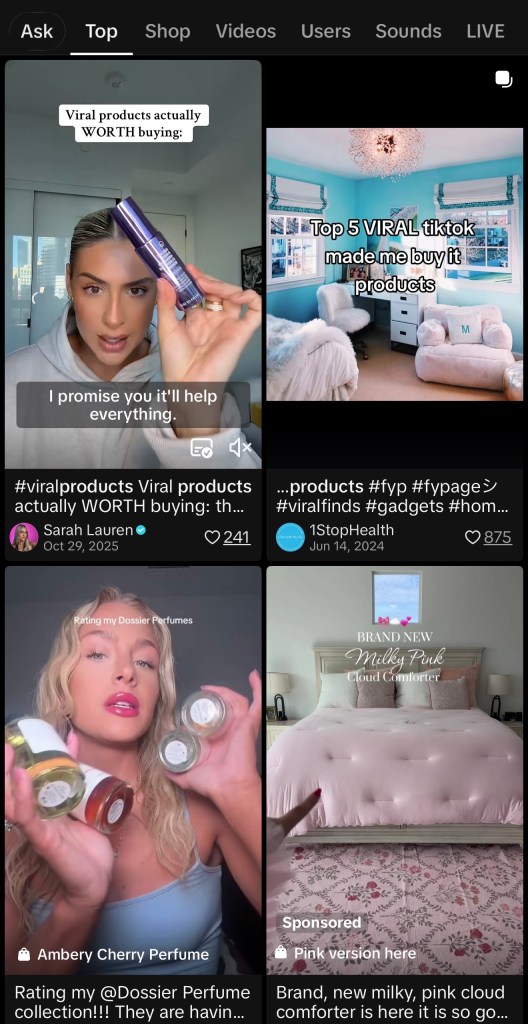
I am, admittedly, guilty of finding myself sucked into several of those almost interpersonally recorded TikTok makeup ads vouching in favor of obscure Korean skincare brands, among many others– marketing stratagems disguised as conversations– which are pumped out by a plethora of influencers, all of various calibers of influence, and in sizable quantity.
Actually, I could have written an entire segment alone merely breaking down just how much time on average I waste per week, aimlessly browsing the web for items I don’t need/otherwise wouldn’t think to purchase, but items nonetheless which I am successfully convinced the purchasing of will be life-altering in some manner because some girl who looked like me opened her phone camera under mediocre ring lighting and gaped at the screen in typical Gen Z fashion as she applied a swatch of the Maracuja Tinted Moisturizer by Tarte Cosmetics onto her cheek. Why is this? What’s more, I am almost always sorely disappointed with each product’s performance. (Probably because I never truly needed it to begin with, but still…)
Instead, I’ve appropriately elected to shift my focus on a significant component of the evolving age of social media, and all the opportunities it presents to the press and the concept of misinformation as a whole: Online shopping! (whoo!)
And as ironic as it probably would have been for me to make a four minute segment exposing all that goes into this, TikTok-ad-style, I am probably the only person who would rather write a 900 word blog post than see or hear myself onscreen. (And yes, I am well aware this will go over that cap. They don’t call me a logophile for nothing).
So sit back, relax, grab a snack, and let’s delve into it. This one’s for my fellow teenage/adolescents who find it difficult to scroll past these type of advertisements– which, spoiler alert, know exactly what they’re doing, by the way. Those of us who, no matter how much we speculate it’s too good to be true, still have trouble silencing those intrusive, tempting words in the backs of our minds: but what if it’s not? Could this be the game-changing product my life has been missing all along? (Or maybe that’s just me.)
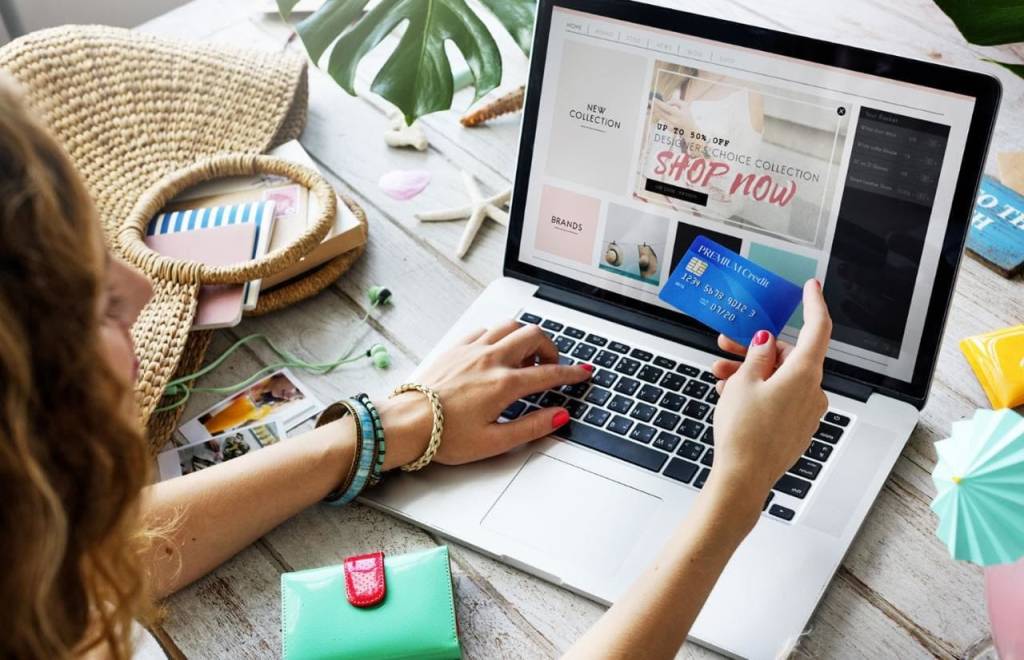
Bred out of convenience and a money-hungry, evolved desire for profits across a new medium, online shopping has presented the world with a whole new ballgame to foster and enable a culture of materialism. While the concept was technically first introduced in 1979 by inventor Michael Aldrich (he invented the ability to ‘call in’ to a TV program to make various catalogue purchases, or “teleshopping”), mainstream online shopping as we commonly know it to be today found its start in 1995, with the launching of the revolutionary e-commerce platforms Amazon and eBay (then known as AuctionWeb).
Being born in 2002, I never stood a chance.
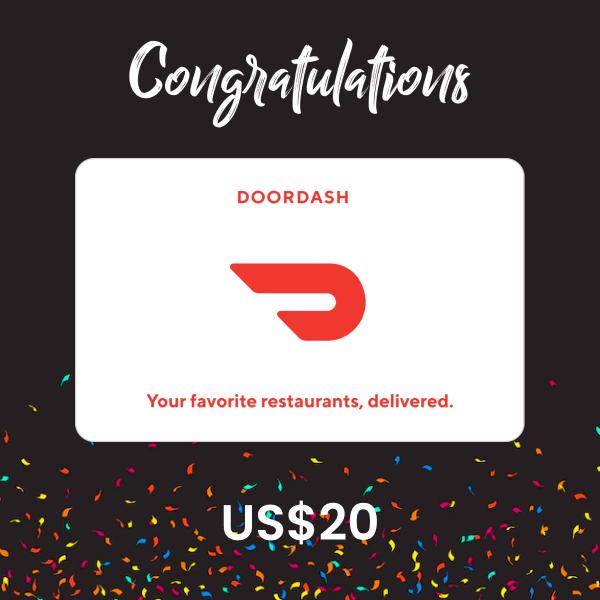
Money can be drained directly from the pockets of naive, impressionable consumers like you and I, without even having to leave our houses. What a monumental, innovative business model, indeed! And it has proven to be such a prodigious game changer that our beloved malls we all once knew and loved are being driven out of business amidst this new age of online shopping, which many view as being more convenient, more affordable, and more versatile. But it doesn’t stop there. Virtual food ordering and delivery platforms like DoorDash, UberEats, and GrubHub currently occupy a cumulative 111 million users and have gained an influx of over 16% since 2020, certainly increasing since the pandemic, but demonstrating a tremendous likelihood of lingering popularity in the imminent future all the same. In an digital age where everyone is dependent on their phone for nearly every single daily function, it is all too easy to hitch ads throughout every nook and cranny of the web so they are seen by just about every user of all ages, sexual orientations, occupations, interests– just about every self classification you can muster, really. I cannot tell you how many purchases I have made online and been offered a $10, $10, $20 ‘reward’ if I made an account through DoorDash (a pointless ‘gift,’ however; as someone who is already a DashPass member. It is more of a bribe to enroll with their partner than anything else).
Again– I never stood a chance.
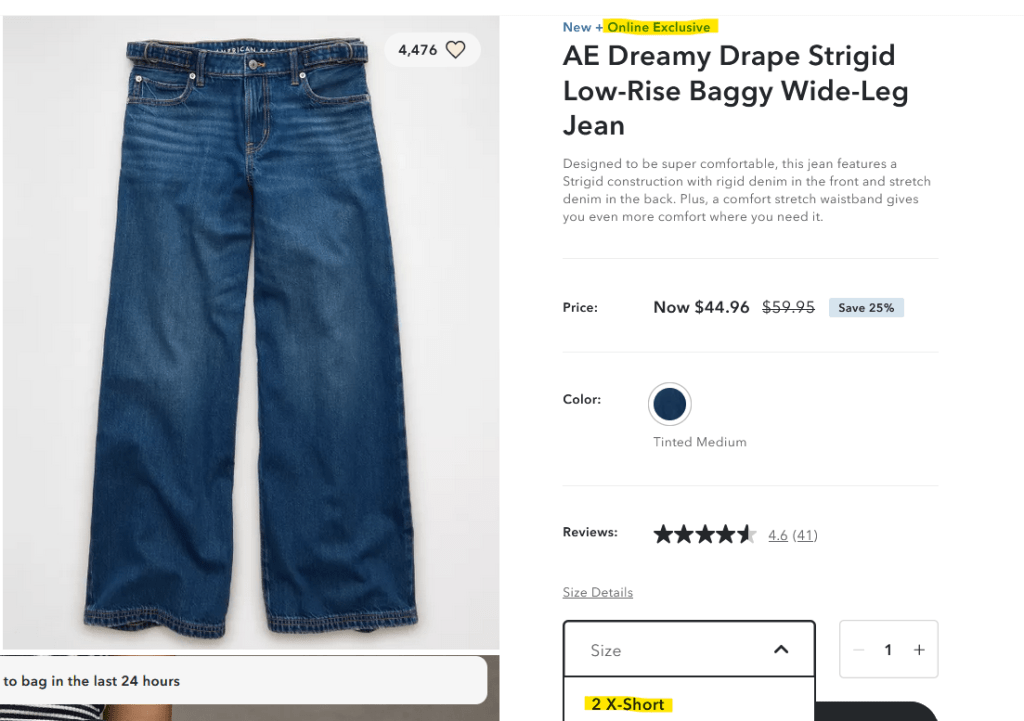
Because not only do these methods of shopping online save time and are often less expensive, but companies have since significantly weeded down their selection of in-warehouse items, while others have closed the doors of their in-person locations altogether; clearly, businesses anticipate a greater influx of online shoppers than in-store. Whether you bid into this modern lifestyle or not, there are certain products you are simply backed into a corner and forced to purchase online if you wish to buy them. As a petite individual (under 5’0), I have to buy ‘extra short’ jeans if they are to sit above my ankles. Of the few clothing retailers that do offer them, such as the trendy American Eagle Outfitters, they are only available for purchase online. In addition, American Eagles features a slew of other ‘online exclusives,’ available for purchase solely off their website. In doing so, American Eagle effectively negates a handful of shoppers who might otherwise arrive in-store to make purchases, driving a greater percentage of their customer volume to their website and henceforth contributing to this collective, nationwide transition, adoption and eventual preference of online shopping over in-person shopping– the move is intentional, strategic.
But of course, while online shopping undoubtedly has its benefits towards us as consumers, surely we cannot expect these massive conglomerates to make such engrossing business alterations only with our best interests in mind? Surely there is some sort of greater incentive in it for them other than merely adapting with the times? Or rather, how could this newfound shopping phenomenon that has taken the retail industry by storm be further spun for advantageous, profitable benefit?
In other words, releasing selective ‘online-exclusive’ styles is one method to boost Internet sales. Another, of course, is stooping to the level of the players in order to play the game (aka, us!). I believe modern advertisements are highly curated with this mentality.
Which brings us to the TikTok video aforementioned. (And the consequential downsides of near religious smartphone dependency, but that can hopefully be inferred.) Although it’s certainly not the only one.
More and more frequently I have witnessed brands we grew up knowing, wearing, eating (and I’m sure you have, too) going viral for silly comments they’ve left in various places across the Internet, one most recently and notably being the trailer for the new Marvel Cinematic Universe’s Spider-Man: Brand New Day– an inevitably self-prophesying future blockbuster which set a new record for the most views within its first 24 hours of release at nearly 719 million views across platforms. As well as the famously recurring fast food twitter feuds between popular brands like Wendy’s, Chick-fil-A, Burger King, and Taco Bell.
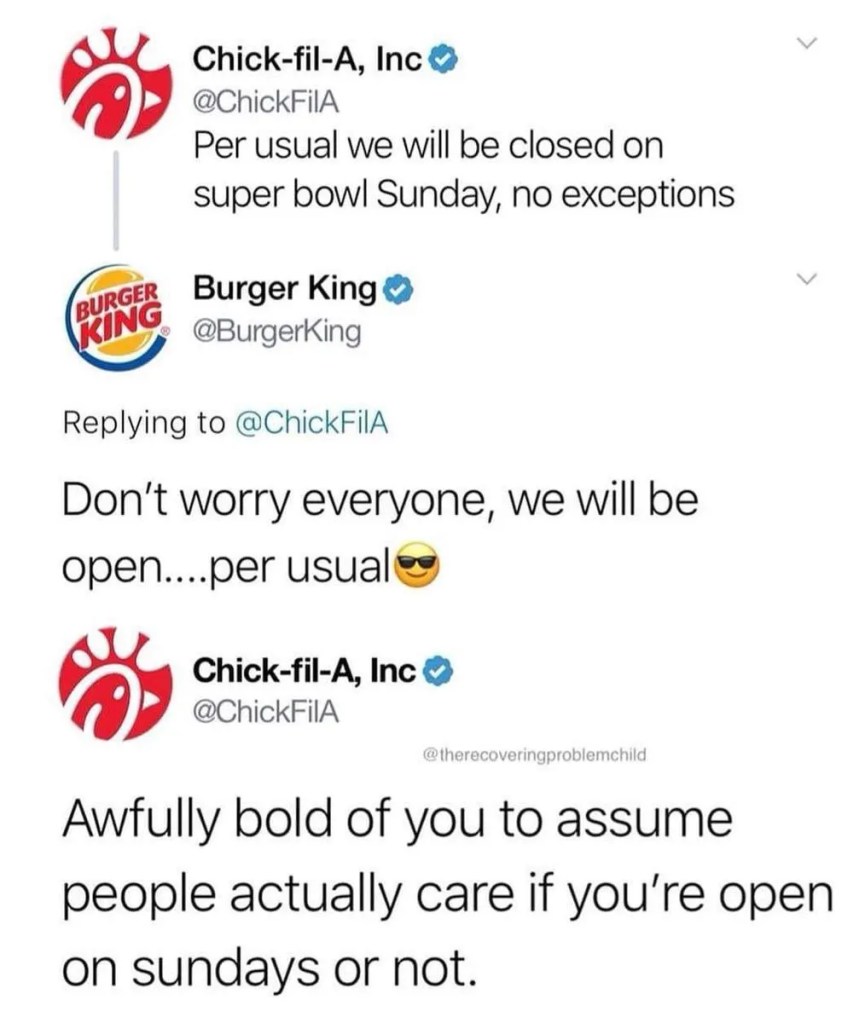
These, of course, garner thousands of likes, comments and reactions in public Internet spheres where interactions are high– and they do this because it’s humorously unprofessional, and catapults them into relevancy.
Their intention couldn’t be more clear: appeal to the younger consumers that so massively make up the population of online shoppers and web perusers. In fact, Gen Z is expected to account for nearly 20% of all global transactions by 2030, and as the most chronically online generation, companies are eagerly anticipating online shopping to dominate this percentage of transactions with torch in hand.
Why might this be so problematic, you might ask? Why does it matter?
It matters because only 39% of U.S. teens reported receiving digital media education during the 2023-24 school year, despite 94% wishing they had, particularly given its modern relevance and the all-consuming nature of the media in our everyday lives. Online shopping has (technically) been around since the late ’90’s, yet Illinois was the first state to mandate the education of digital literacy courses in all public high schools— in 2021! It becomes intimidating when the media is being manipulated like so, not only in the ways it aims to inform us or to educate us, but to sell us products. To dictate the way(s) we are spending our money. And they have learned to speak our language by means of doing so more efficiently.
So what happens if we are struggling to disseminate fact from fiction? Advertisement from authenticity? This arguably poses an even greater risk than merely the spread of conventional misinformation– actual, real life finances are involved. And to what lengths will sellers online go to ensure we spend them?

The Internet shopping scam is a newer– yet increasingly prevalent– phenomenon of intentional misinformation (or rather, disinformation) that often gets overlooked because it does not fall within the conventional classifications of misinformation. And it can manifest in several ways. I’d argue it can be safer purchasing from a renowned brand like American Eagle as opposed to an independent seller off eBay or Facebook Marketplace, for instance. (Don’t lie, we have all scoured Marketplace for a niche item at some point in time. We all know how that went.)
EBay and other second-hand platforms like it do instill seller/buyer money back guarantee policies to help protect users against fraud, but it is never as foolproof as purchasing straight from the retailer– although sites like StockX and GOAT have gained recent traction for their retailing of name-brand apparel and shoes alike, beneath the promise of their ‘assurance of authenticity’ checkers– intricate programs which involve a holistic inspection process in order to verify the authenticity (or fraudulence) of a given product.
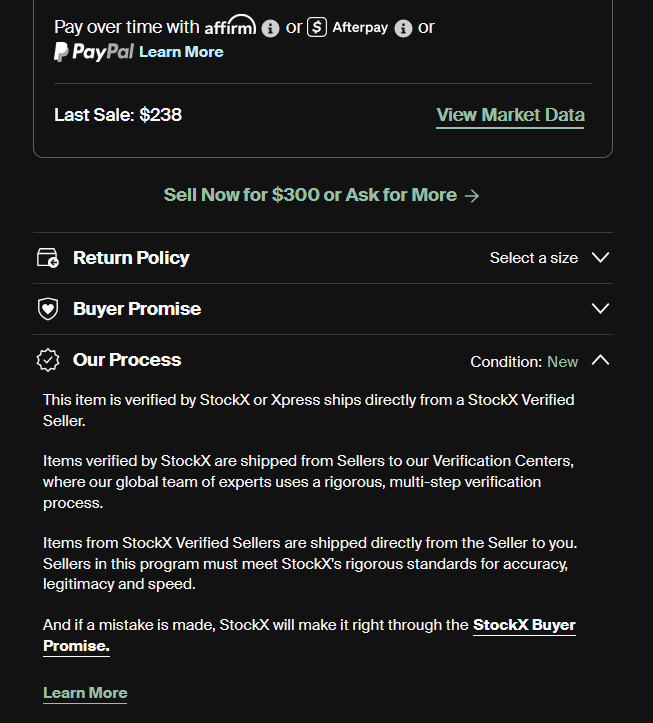
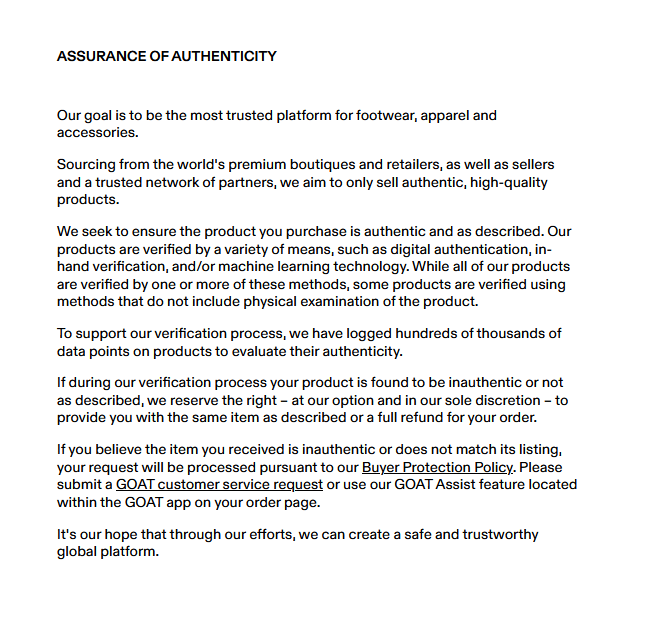
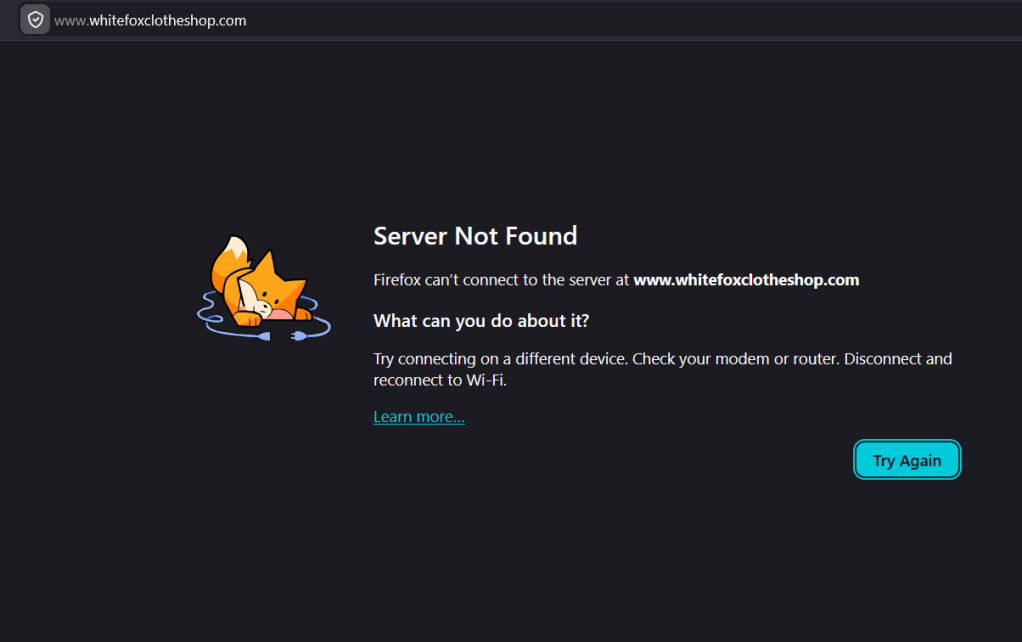
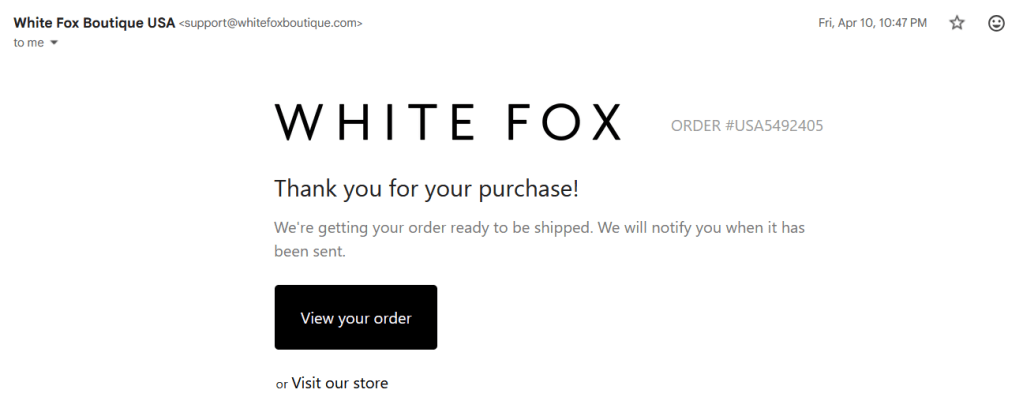
However, this doesn’t stop scammers from creating uncanny website replicas built to deceive– an estimated 28,000 fake domains, according one source, pose as popular brands with an objective of selling cheap counterfeits/nonexistent products altogether, either to steal money or collect user data. These are often under commonly mistyped web domains. I myself (again, admittedly) actually fell victim to such efforts a couple years back when I’d tried to make a purchase off White Fox Boutique, and instead had found myself at the near identical “White Fox Clothes Shop” (spoiler alert: they were knock-off sweats); by the time I’d realized my mistake and had attempted to file a dispute with my credit card company, the site domain had already been taken down.
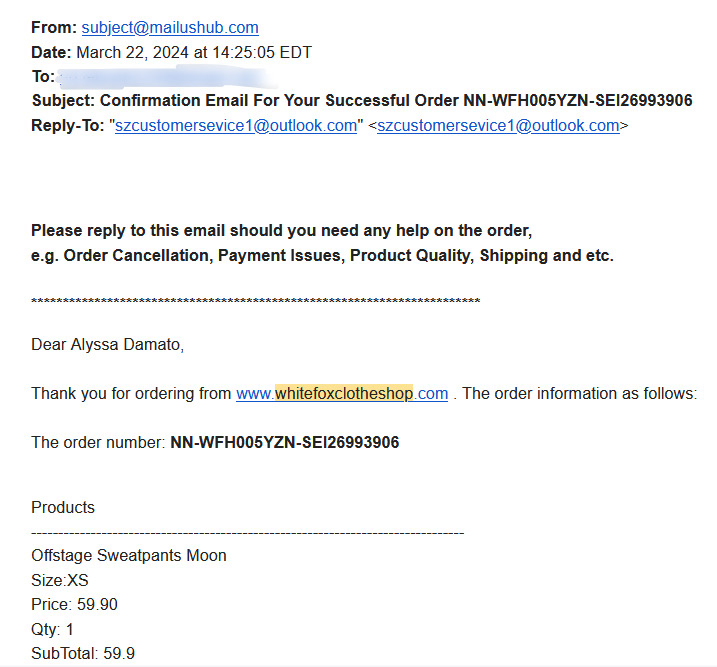
Here is an example of what a legitimate order confirmation off of White Fox’s website should have looked like:
I do not fall victim to shopping scams often (at least, not in such the blaring, practical sense), but who’s to say all the reels that regularly swarm our feeds on apps like TikTok and Instagram– which do directly inspire otherwise unprompted spending splurges, as we’ve established– aren’t forms of scams themselves in their own right?
I can imagine a common tidbit of advice you are offered by family members, friends, and peers alike is likely this: read the reviews. Read the reviews before buying. Always. (In fact, roughly 40% of U.S. adults always or almost always read reviews prior to purchasing a product for the first time.)

And while this can be a fairly solid method to avoid falling into the wrath of all-too-compelling advertisements, reading reviews to help dictate purchase worthiness has become less and less reliable, given several popular retail brands, including Amazon and Walmart, have been slammed as of recently for ‘helicoptering’ their review sections, as well as hiding or removing certain reviews altogether that don’t position their products in a positive light. The skincare brand Sunday Riley even underwent a lawsuit over its deceptive conduct.
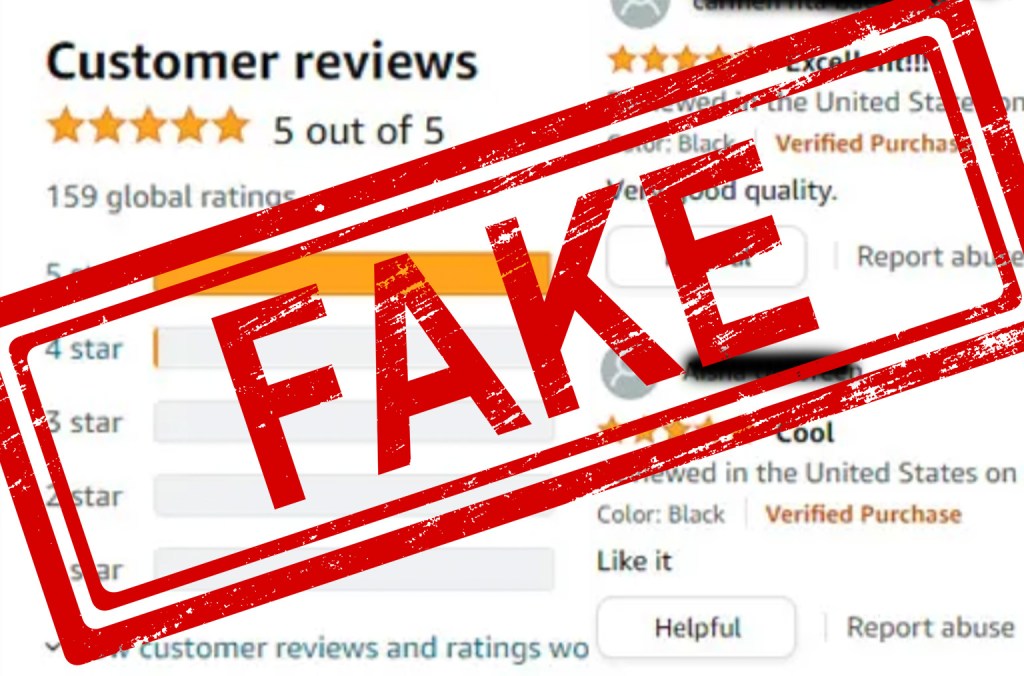
This is not only unethical, it is downright cheating consumers. It is omitting crucial information that may otherwise be more representative of the average consumer’s thoughts on the product– information that otherwise would have played a role in forming future consumers’ perceptions of (or rather, against) the product. It drives more customers to make purchases under a falsely construed narrative. Deliberately impeding with the information one has at their fingertips to accurately form an opinion is meddling with the outcome of said opinion. It is a manipulative, deceitful tactic intended to engineer a particular outcome. Therefore, it is disinformation.
(Also, if a brand feels the need to do this, it is logically within reason to assume their products surely can’t be all they amp themselves to be– at least, not enough to withstand competition on their own four legs. Just saying.)
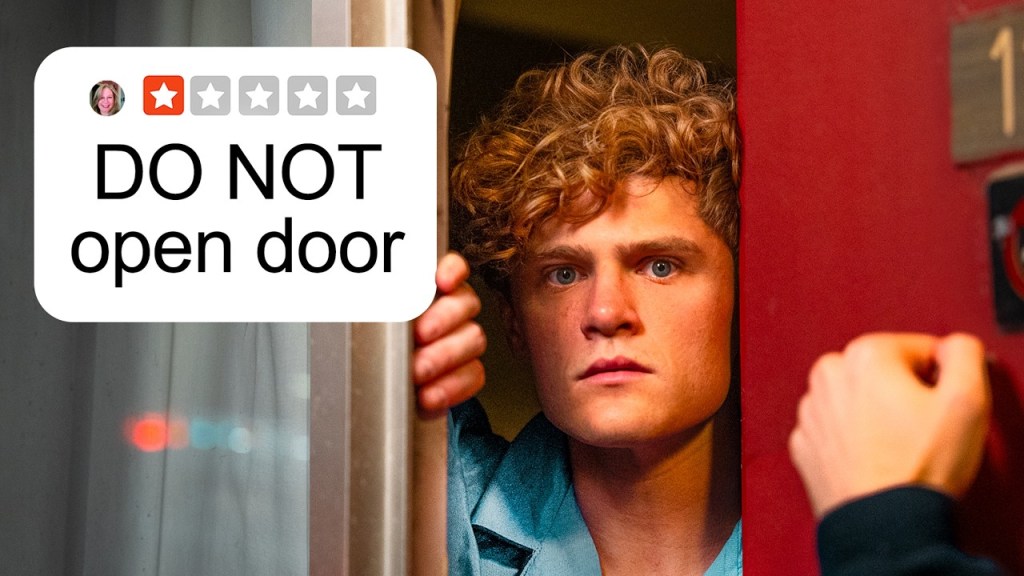
Similarly, false reviews can be published with the intent to defame as opposed to paint a positive picture. Popular cross country turned travel influencer Ryan Trahan has a series on YouTube where he tests particularly awfully rated products, services and establishments across the country; more often than not, it is fairly evident these reviews are wildly blown out of proportion or even straight up false– even those which appear to echo the experiences of others– speaking volumes on the reliability of excessively opinionated, dramatic, or seemingly absurd user reviews, implying many may post reviews with the sole intention to troll or mass sway public perception with their own extraneous, predisposed agendas.
Now, this isn’t to say that several companies, particularly those promoting products on their own designated site as opposed to a third party platform (such as Instagram or TikTok), haven’t implemented strategies to combat excessive review intervention, as well as veered away from heavily endorsed or blatantly false reviewing. Many websites portray reviews from ‘verified purchases’ first and foremost, and listings on TikTok often indicate whether a video is sponsored content or not (this can be seen in one of the videos depicted above).
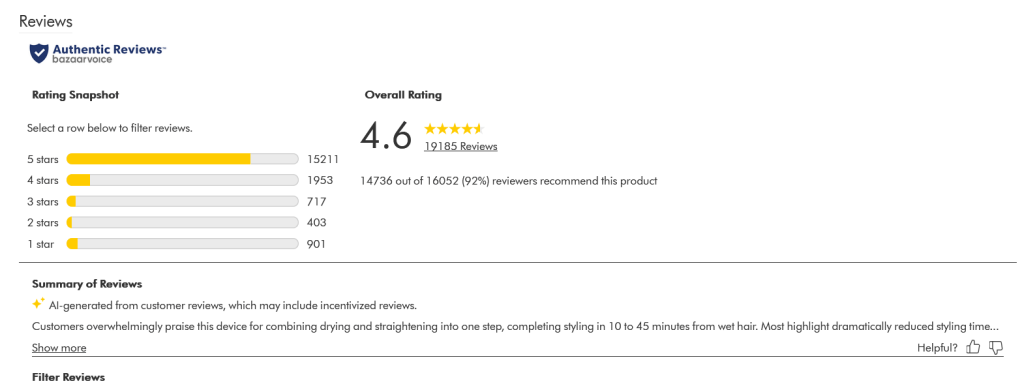
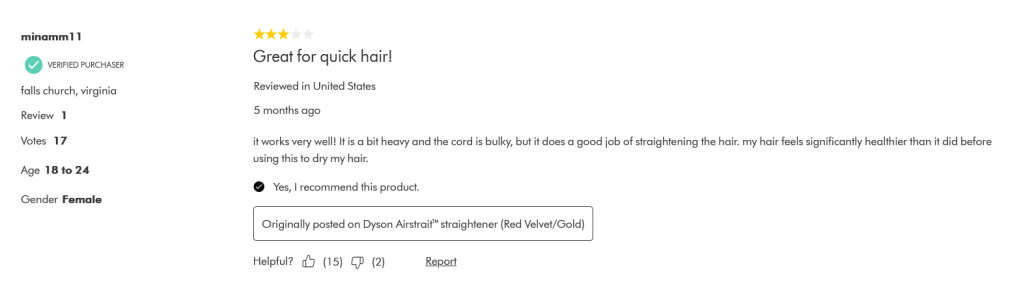
Showcased above are a couple efforts the vacuum-turned-hair tool mogul brand Dyson has made to improve the trustworthiness of their product reviews on their main website. Not only does Dyson disclose the general demographics of its customer reviewer (depicted in the latter screenshot), they also clarify the initial posting of the review and when (published on the same product, the Dyson Airstrait straightener, just in a different color), the number of people said review has assisted (on an upvote/downvote basis), divulged the potential presence of incentivized reviews and what these would look like, and perhaps most notably, featured the Bazaarvoice Trust Mark— guaranteeing honest, unbiased user-generated ratings which have passed rigorous authenticity standards, backed by industry-leading fraud detection, global moderation policies, and real-time eligibility rules. In this age of heightened uncertainty whilst shopping online, Dyson truly goes above and beyond to ensure the ease of mind of their buyers.
Other websites, such as Consumer Reports, offer certain services at a fee to detect common patterns of manipulation across product listing pages, such as abrupt bursts of high ratings. Although these resources aren’t practical nor affordable for everyone; free-to-use alternatives, such as ReviewMeta and FakeSpot, each closed their doors back in 2025, respectively.
Even in spite of all these efforts, fake reviews continue to run rampant online, successfully deceiving millions of customers each year. Amazon reported blocking over 200 million suspected fake reviews back in 2022– a 20% increase from the year prior. While such responses have visibly made an impact, they have proven somewhat futile in the elimination of false reviews altogether, leading many experts to believe the issue may be insurmountable.
The only thing we as adolescent consumers in a progressively digital world really have within our control is our ability to be as diligent and wary online as possible. As an impulse buyer myself, this is something I am regularly working on. Even the savviest of Internet users are often subject to and tricked by misinformation online throughout their day-to-day via product listings and reviews. It may feel like we are at a systemic disadvantage as brands and platforms continue to adapt with the times, but we shouldn’t necessarily fear being left in the dust. As of 2026, the number of states mandating digital literacy education in K-12 schools has risen to 25 since Illinois first passed their law in 2021– a reassuring statistic that is just the beginning. As long as we can start to collectively familiarize ourselves with several of these misleading marketing tactics, common uses of language, and perpetual patterns of Internet shopping scams, I believe we will be A-okay.

 alyssa d'amato
Leave a comment