
mco 427 – blog post 3
For as long as I can remember, and for whatever reason that might be, I have been fascinated by teeth.
Yes, I’m referring to those (hopefully) pearly white blocks of bone wedged within your jaws.
Maybe it was because I was once relentlessly and vituperatively tiptoed around for reason none other than my teeth. Maybe it was due to my teeth and their consistent role as either an a) initial attention grabber, b) first conversation starter or c) reason for avoiding altogether, deliberately excluded, whispered about or being the (albeit involuntary) receiver of those sidelong glances the people send your way assuming you won’t notice. Perhaps a sort of infatuation was simply birthed out of the world’s evident ability to hyper fixate on the very inspiration behind the nicknames “sharp tooth” and “buck tooth girl” imposed upon me I unwillingly carried throughout my elementary and middle school years. (No, I’m not bitter nor carrying any residual resentment at all).
I had an overbite. It wasn’t a facial deformity. (Although with the way people reacted, it might as well have been.)
Or maybe it was the way my dad drilled it in me growing up to brush daily until I no longer felt the texture of plaque on my teeth. My dad is on the path for dentures due to a severe and unmendable case of enamel erosion, mind you.
Okay, so maybe it is more of an anxious attachment or rather negative connotation I maintain with the study of teeth (i.e. odontology) and henceforth the practice of dentistry as a whole. But I cannot deny, whatever the source(s) of my enamor, I have always been meticulously besotted with the appearance of my teeth– once it was actually within my realm of control. Brushing? Every day. Retainers? Every. Single. Night. It recently dawned on me after conversations with my brother and fiancé (unless I just need to ask some people who aren’t those two) that most people don’t appear to be too aware of the number of teeth they have in their mouths, roughly which ages their various molar sets grew in (hint: there’s only three) and aren’t able to differentiate their canines from their incisors? Is that unconventional? Because I was under the impression that was common sense. (To my awareness, I’m not neurodivergent, either).
Most people also quit wearing their retainers after x number of years.
Regardless, I am happy to say after years of trauma and inner turmoil over the subject, I am finally at a point where I like, if not love, my smile.
Just the other day, I had a customer tell me my smile was ‘worth a million bucks,’ and while this is numerically inaccurate: it’s more like six grand, but that’s beside the point–
(Wear your retainers, kids!)
So if I could bear to poke my gloved hands into the mouth of some character I see at my daily customer service job (spoiler: I can’t), perhaps I’d even consider it as a profession for myself, with a clear cookie cutter goal to ‘give back’ to the world by dedicating myself to doing the same for others. (Not the bullying, the oral transformations). Wouldn’t that just be a picture-perfect, underdog plaque-on-a-wall cover story? “Bullied girl with (formerly) lopsided orthodontic anomaly opens dental practice to transform smiles, because she understands how much your teeth impact your self image and everyday endeavors.” It would be, dare I say, the optimal prophetic resolution, the sense of peace and closure everyone hopes for following the rainstorm of a start I had.
But I digress– instead, I tend to indulge my dental curiosities, if you will, by watching influencers like Dr. Benjamin Winters (aka. “The Bentist”) and his hilarious (for geeks like me, perhaps) commentaries on the wild orthodontic excursions and mishaps of the Internet (as you can probably imagine, they are wide spanning). It’s as entertaining as it often is educational.
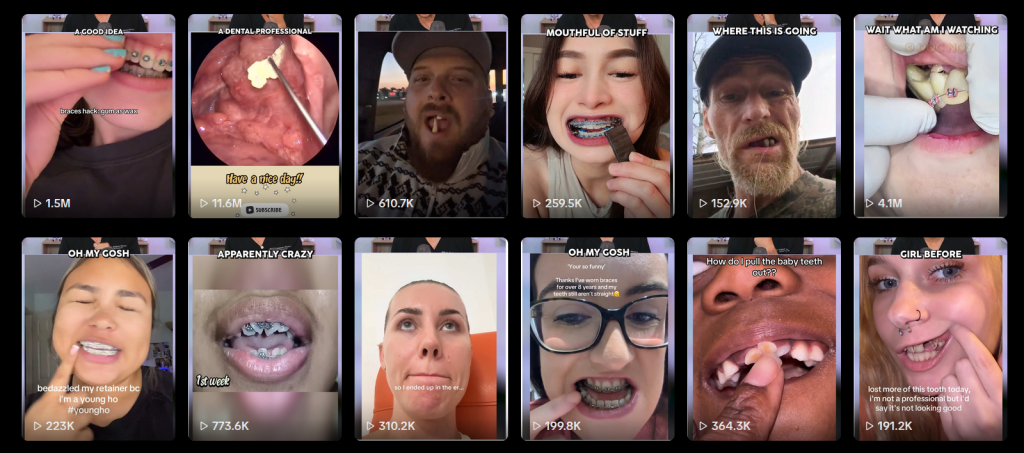
But one thing that doesn’t come up in his videos nearly as frequently as I’ve recently hoped is the (apparently controversial) topic of fluoride. As someone who loves teeth, and who is burdened with morbid curiosity, this topic was sort of a no-brainer for me. I have one grandmother who believes fluoride is an innovative game changer for oral health, while the other believes it to be poison. Why do they maintain such drastic views? And what better question to ask myself than the one(s) that are so integrated into society, your average person wouldn’t think twice about it? Aren’t those topics the easiest for the media to manipulate? And consequently, the most difficult to find answers on that deviate from the social norm as you know it to be?
Grandmothers aside, it seems to be pretty universal knowledge that fluoride is a key component to preventing cavities and enforcing positive oral health. Fluoride has been a crucial ingredient in a majority of the most renowned dental hygiene brands’ toothpaste products for years (starting with Crest in 1956) due to its role in revitalizing tooth enamel and inhibiting the growth of certain bacteria.
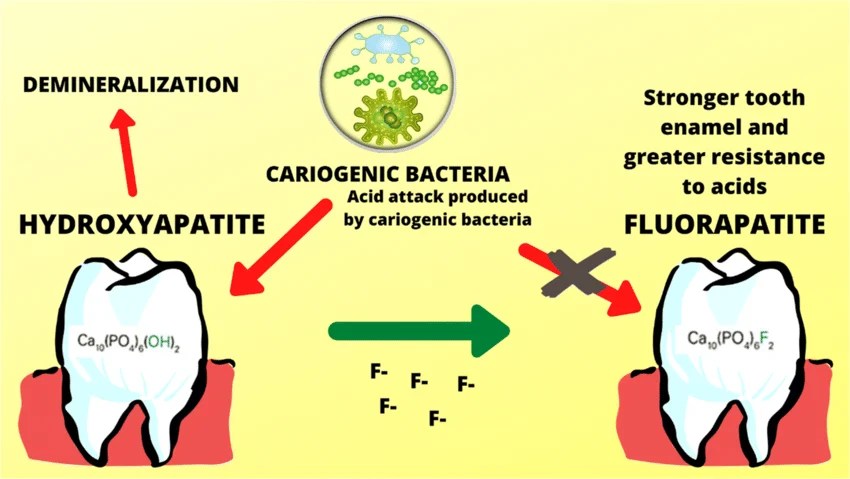
It is a mineral naturally traced on a far lesser scale in water, soil and certain foods. But what else does fluoride impact, for roughly 63% of the U.S. population to receive fluoridated water of 0.7 mg/L regardless of income, for those issuing authority to collectively agree to go out of their way to manually add it (time and money, likely) to our public drinking water? Do we pay a tax on that? Because surely it can’t be solely out of the goodness of their hearts and their wish to prevent cavities, can it? Or, perhaps more grimly, what else could fluoride impact for so many people to be increasingly set against it, to warrant the development of natural toothpaste alternatives omitting fluoride? It feels dismissive to simply wave away their concerns as the mental gymnastics of a conspiracy theorist, even with the knowledge that adults have demonstrated 44% fewer cavities on average adults and 58% fewer in adolescents since the fluoridation of water in the 1960’s. Do all perks come at a cost?
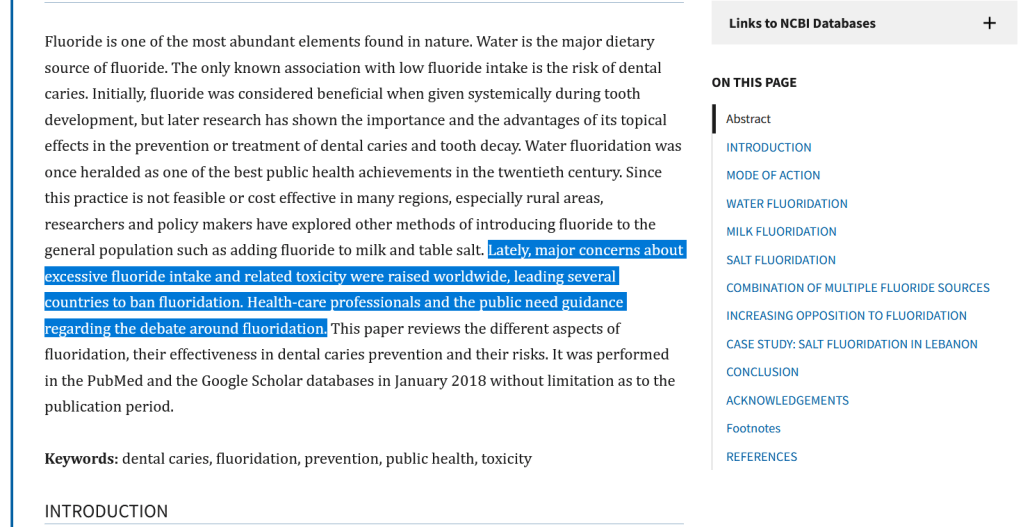
Just the other day I happened to skim across a line in my textbook for my level 400 Nutrition in the Life Cycle course that alluded to the improved oral health of children raised in areas where their public drinking water undergoes fluoridation. I myself have never had a cavity as a child or adult, fingers crossed it stays that way. (Although it is tough to tell whether this is a coalition of factors; I’ve never been a fan of candy or sugary drinks, and I’ve had dental sealant applied on each of my molars upon their eruption, wisdom teeth included.)
I have also read from numerous sources that RFK Jr. has been advocating against the addition of fluoride in water as of recently.
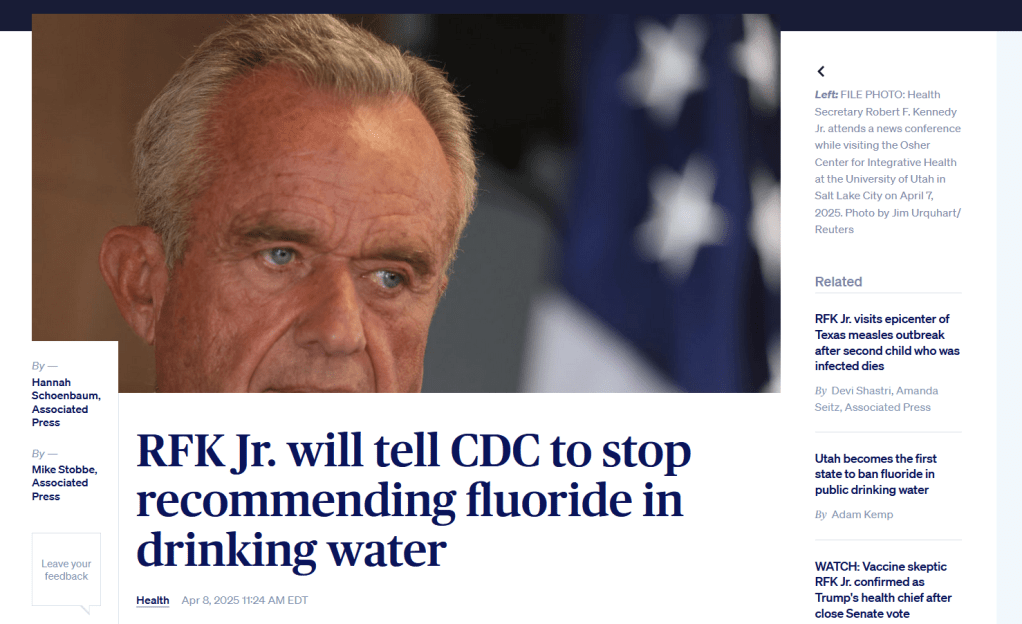
But if I’m expecting to yield any number of reputable results for this question, I’ve got to be more intentional with my findings. On both ends of the spectrum.
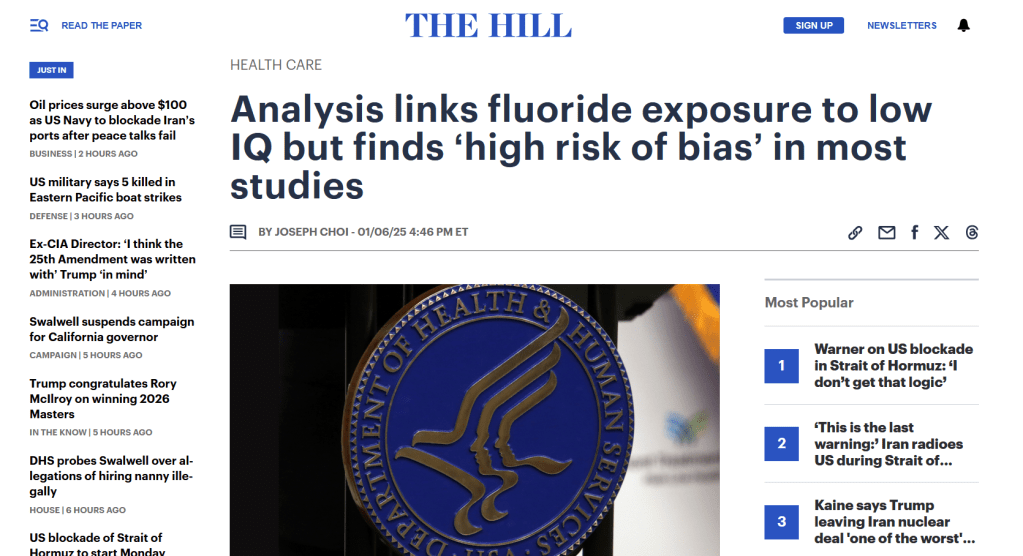
Due to some of my findings, I went on to filter news articles by political bias on platforms like Interval and AllSides, which strive to break through censorship and politically incentivized articles. The most profound concerns of artificially fluoridating public drinking appear to be overwhelmingly dominated by the effects it poses on children and adolescents, with claims of lower IQ perpetuation amongst children in areas where water was found to contain nearly double the benchmark of 1.5mg/L for safe fluoride consumption. Upon further investigation, I was able to find that these findings were not conducted in the U.S., but rather China and India– not necessarily indicative of our own fluoride levels in our water, and demonstrating clear ulterior motives, whatever those might entail. Additional studies went on to prove IQ scores, while associated with excessive fluoride intake, was not necessarily proof of causation, but rather correlation that could be enforced with “moderate conviction.” To me, it begs the question– what other factors could also be contributing to lower IQ in children? Video games? Otherwise sedentary lifestyles?
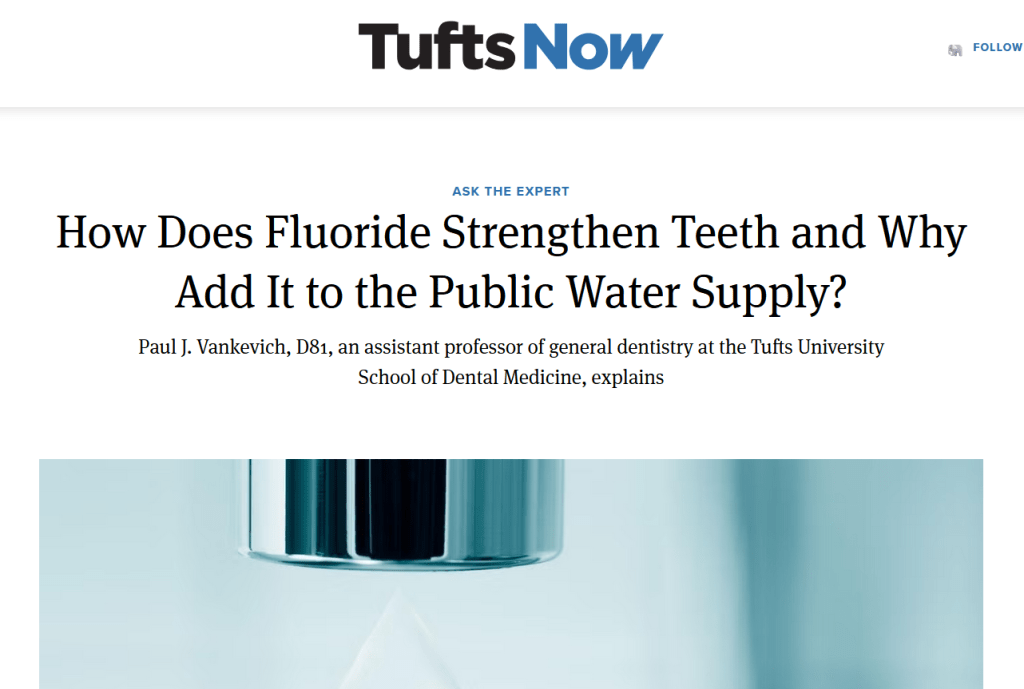
The second largest argument I have seen in opposition to water fluoridation is how something that is merely swallowed (passes through the esophagus) serves any function at all to our oral health when it is swiftly consumed like so, either negatively or positively. But upon further investigation, I have found numerous sources to break down how fluoride actually works to protect against and prevent cavities: it binds to the enamel, and is absorbed by your salivary glands. So, swallowing it as opposed to topically applying (via toothpaste) would be just as effective towards rejuvenating your teeth, constantly supporting and combating against tooth decay over time.
So, is water fluoridation safe? Maybe. Maybe not. Truthfully, I don’t think I can provide a definitive answer from my findings. To me, the debate on whether to continue fluoridating public drinking water or not feels highly reminiscent of a long-winded political game of tug-of-war. It is clear that certain articles are published openly and loudly to illicit certain reactions, such as the one on RFK Jr., while others are subtly posted elsewhere and/or stifled (almost as if under the guise of the Neutralization Theory.) While there is plenty of data to attest to its impact on oral health, the largest concern amongst most Americans stems from the other health risks it could pose, particularly towards our youth. Personally, I don’t think there is enough information to conclude the drawbacks of fluoridation outweigh its benefits.
Despite not having a solid confirmation nor refute of this claim, I still feel it was successful because it forced me to think critically on a topic that remains prevalent throughout my day-to-day. Following my analysis, I feel far more informed than I did going into it, which is a major win to me. I think everyone should try to question even the most basic of conventions– particularly in an age where anything and everything we should seek is directly at our fingertips. I think, if anything is to contribute to a lack of IQ in adolescents, it is likely the gradual loss of the need to think critically. The ability to think critically is essential for any healthy, well functioning society. And sometimes, there is no true definitive answer without jumping to conclusions (which I suspect is what likely got us here in the first place). So, I feel content with my analysis because it came from a place of honesty.
And heck– maybe one day I’ll work at a dental practice and utilize my Mass Comm/social media (and personal health minor!) skills to operate a social media page, like Bentist– only I’d focus more strongly on debunking the countless fear-mongering theories that run rampant online.

 alyssa d'amato
Leave a comment